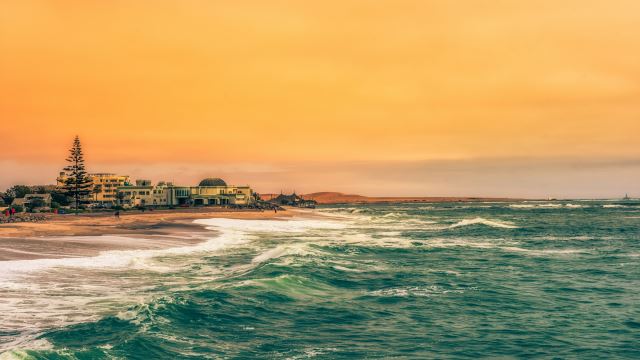
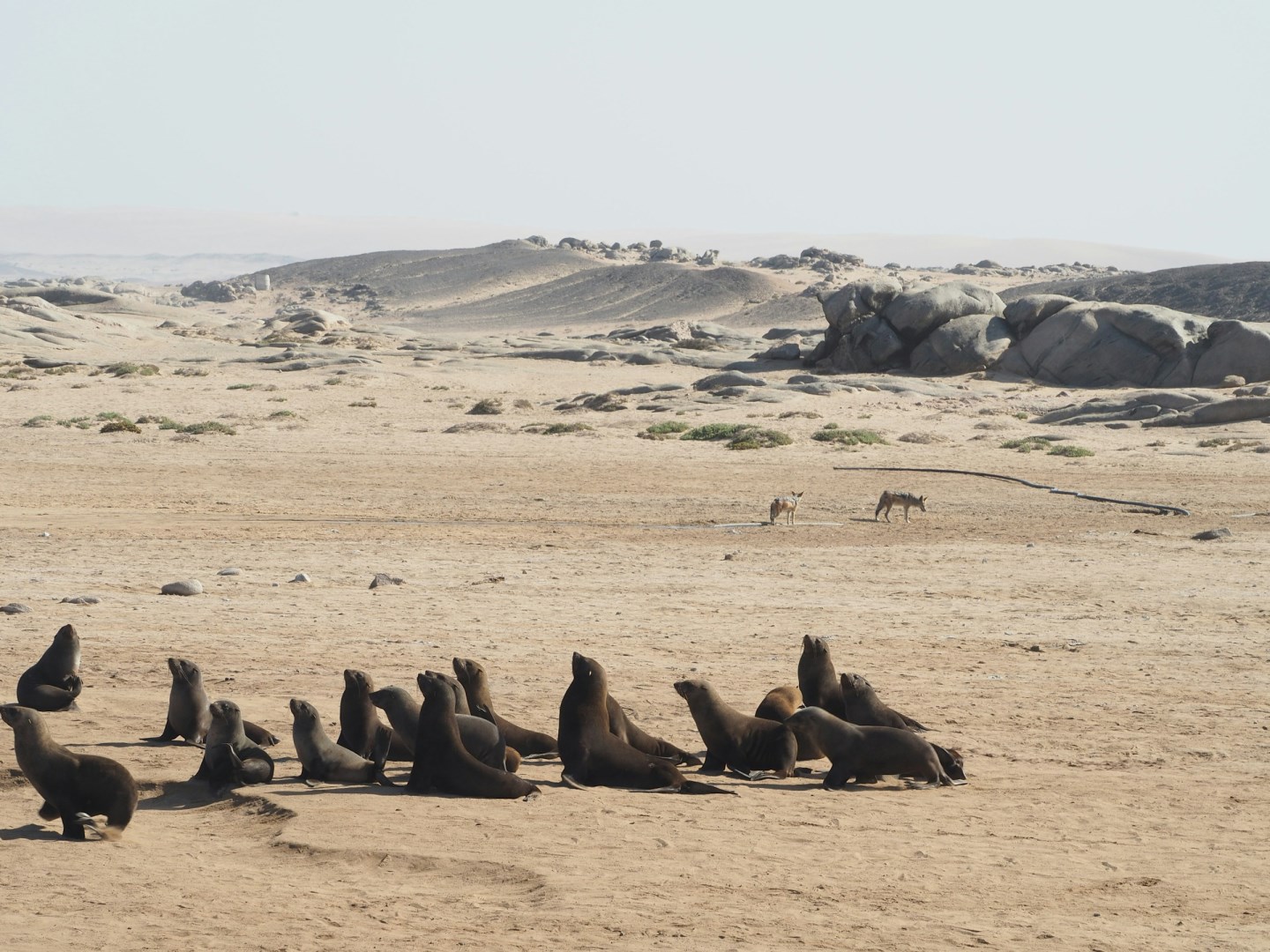
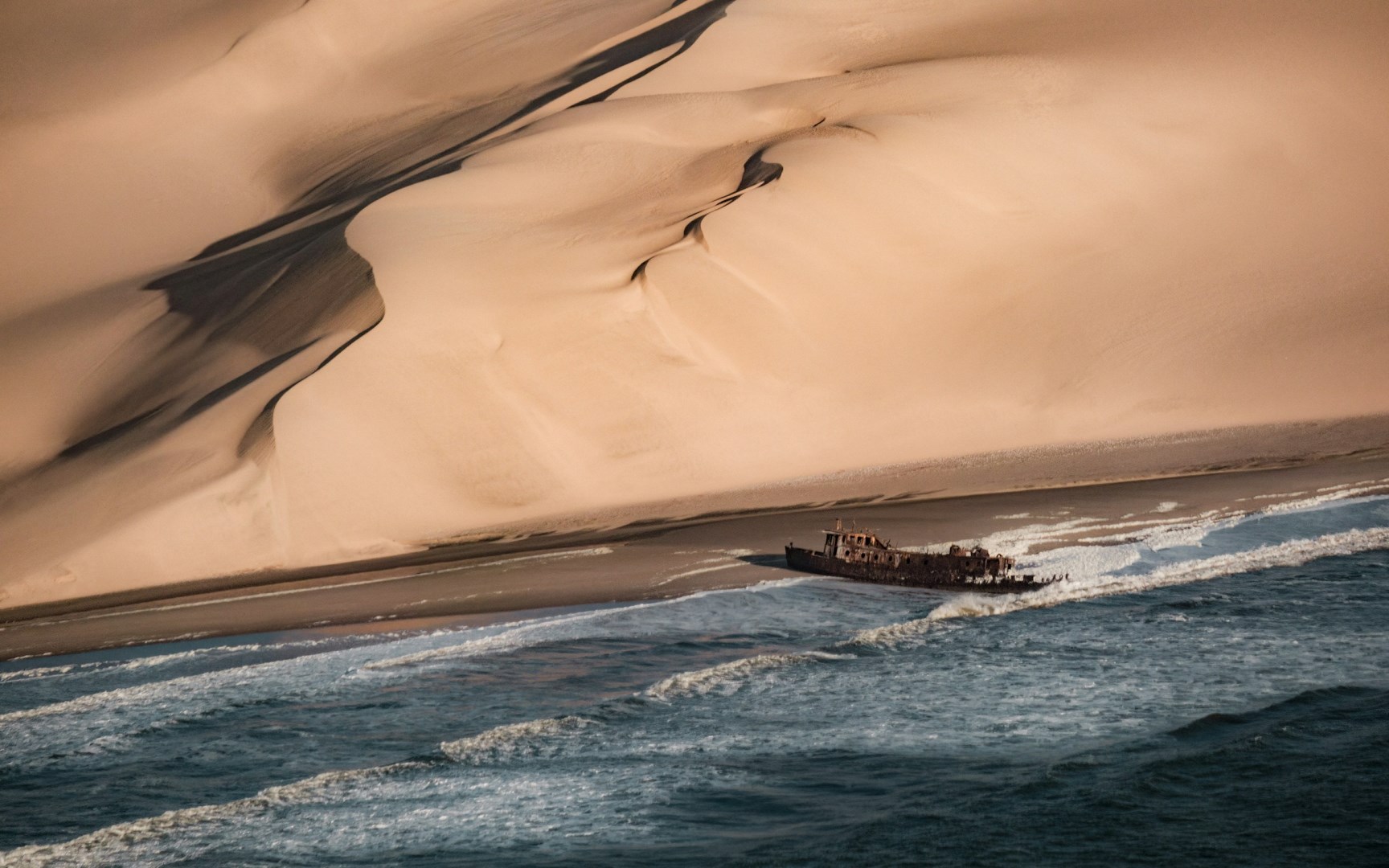
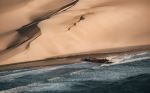
Skeleton Coast National Park stretches for about 500 kilometres along Namibia’s northwestern Atlantic coast, from the Ugab River toward the Kunene River. The park covers roughly 16,390 square kilometres of beaches, dunes, gravel plains, ephemeral riverbeds, canyons, and rugged mountain landscapes. Cold Atlantic water from the Benguela Current helps produce frequent coastal fog, which can extend inland across the desert. The coastline is known for shipwreck remains, whale bones, and other debris, while the isolation of the park creates a landscape where desert and ocean meet with few permanent settlements.
The Skeleton Coast has a long record of human activity, travel, and maritime history. Archaeological sites include a distinctive settlement at the Ugab River made with whale bones, while artifacts and remains of sailing vessels occur along sections of the coast. The harsh shoreline earned its name from the large number of animal bones and shipwrecks found along the beaches. Inland, dry river valleys have provided important routes and seasonal resources for communities living in the wider Kunene region. Today, the park's cultural and historical remains are protected alongside its desert ecosystems.
The park supports wildlife specially adapted to the dry conditions, including desert-dwelling elephants, lions, black rhinos, springbok, gemsbok, Hartmann’s mountain zebra, and cheetahs. The Kunene River mouth forms an important wetland at the northern end, while ephemeral rivers such as the Ugab, Huab, and Uniab create narrow bands of vegetation across the desert. More than 300 bird species have been recorded, including flamingos, Rüppell’s korhaans, lappet-faced vultures, and Gray’s larks. Offshore waters also support marine species including Heaviside’s dolphins and green turtles.
One of the park’s distinctive features is its extensive lichen fields, with more than 100 lichen species recorded. The plants survive through moisture from coastal fog rather than regular rainfall, demonstrating how organisms have adapted to the Namib’s arid conditions. Tourism in the park includes wildlife viewing, photography, and angling, with access subject to permits and bookings. Terrace Bay provides limited visitor facilities, including accommodation and a restaurant. Because of its remote location and sensitive desert environment, the park has controlled access and restrictions on driving, camping, and fishing.
Other Popular Destinations in Namibia