
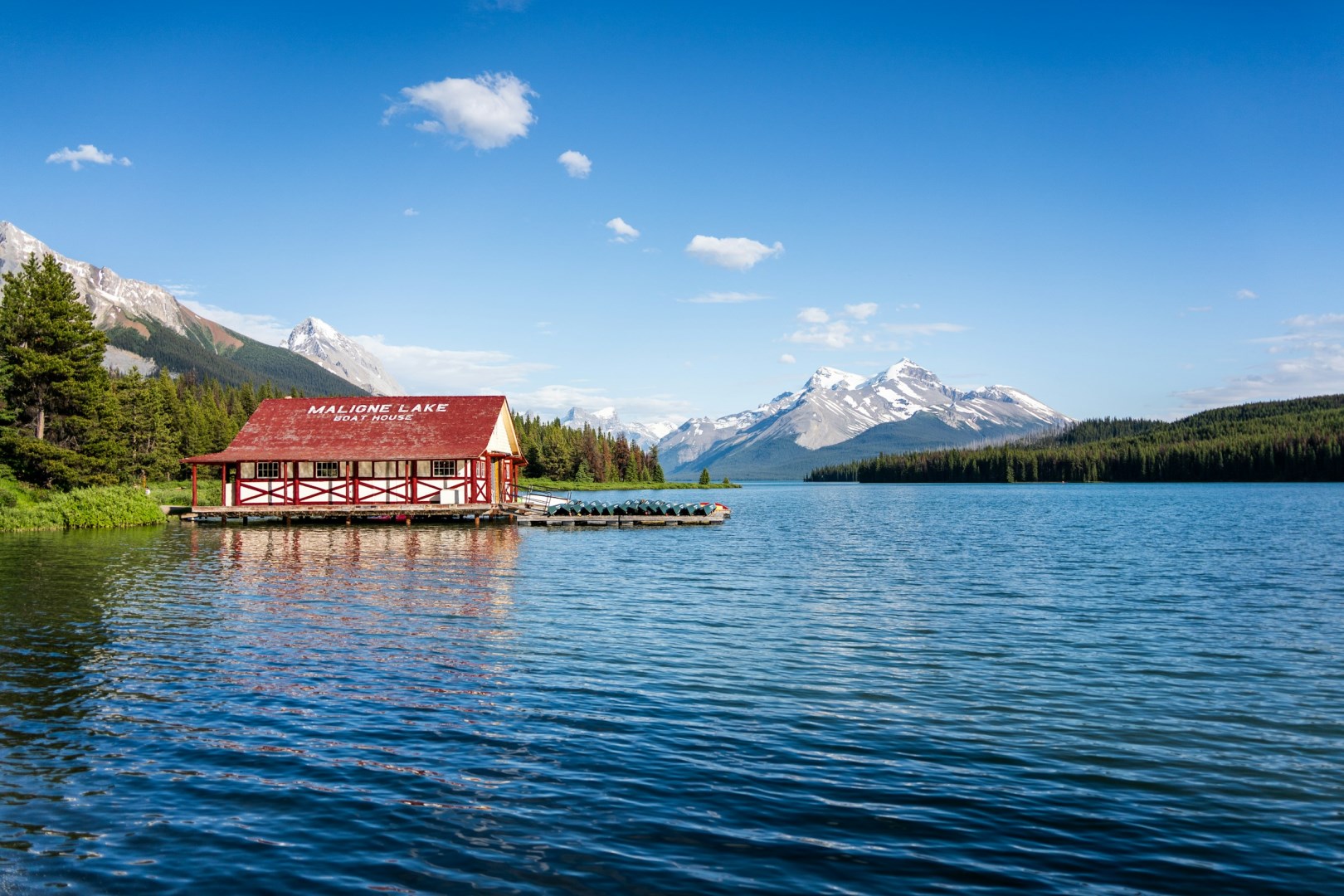
Maligne Lake is a long, glacially fed lake in Jasper National Park in Alberta’s Canadian Rockies. Surrounded by steep mountain peaks, forests, and alpine terrain, it is one of the largest lakes in the park and an important part of the Maligne Valley. The lake extends deep into the mountains, with several smaller islands and sheltered bays along its shoreline. Its clear blue-green water reflects the surrounding peaks, while the Maligne River connects the lake with Medicine Lake and the Athabasca River system. The area combines high mountain scenery with important freshwater and forest habitats.
Maligne Lake lies within the traditional territories of Indigenous peoples including the Stoney Nakoda, Cree, Métis, and other communities with longstanding connections to the Jasper region. Indigenous peoples traveled through the mountain valleys for hunting, gathering, trade, and other activities. The lake and surrounding valley later became part of the expanding network of protected landscapes in the Canadian Rockies. Today, Parks Canada manages the area as part of Jasper National Park, while interpretation programs provide information about Indigenous connections, local wildlife, geology, and the ecological importance of the lake and surrounding mountains.
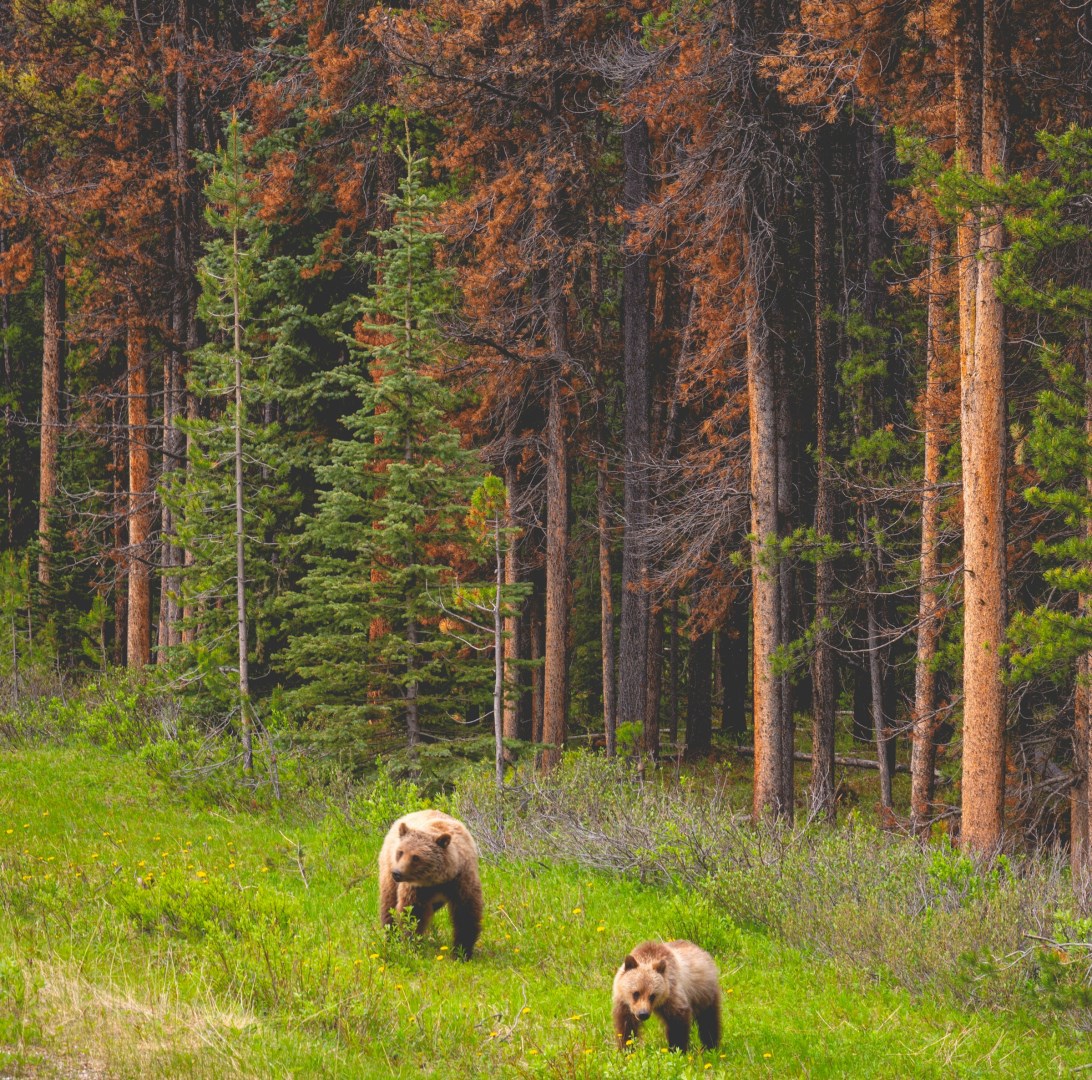
The lake is surrounded by peaks including Mount Charlton, Samson Peak, and Leah Peak, while the Maligne Valley provides access to trails through forest, meadow, and alpine environments. Boat cruises travel along the lake and provide views of the surrounding mountains and Spirit Island, a small wooded island that has become one of the area’s most recognizable landmarks. The Maligne Canyon area, farther downstream, contains a deep limestone gorge shaped by the Maligne River. Wildlife around the valley includes elk, moose, bighorn sheep, mountain goats, black bears, grizzly bears, and numerous bird species.
Food at Maligne Lake is mainly provided through seasonal visitor facilities, while nearby Jasper offers a wider range of restaurants and locally sourced ingredients. Regional dishes may include Alberta beef, game meats, freshwater fish, berries, and maple products. The lake’s unusual color comes from fine rock flour carried by glacial meltwater, which scatters light and produces its characteristic blue-green appearance. Another distinctive feature is its drainage: water from Maligne Lake flows through Medicine Lake and eventually joins the Athabasca River, linking the high alpine lake to a much larger river system that crosses the Canadian Rockies and Alberta.
Other Popular Destinations in Alberta